
Silkron Safety & Precautions: What to Know Before Use
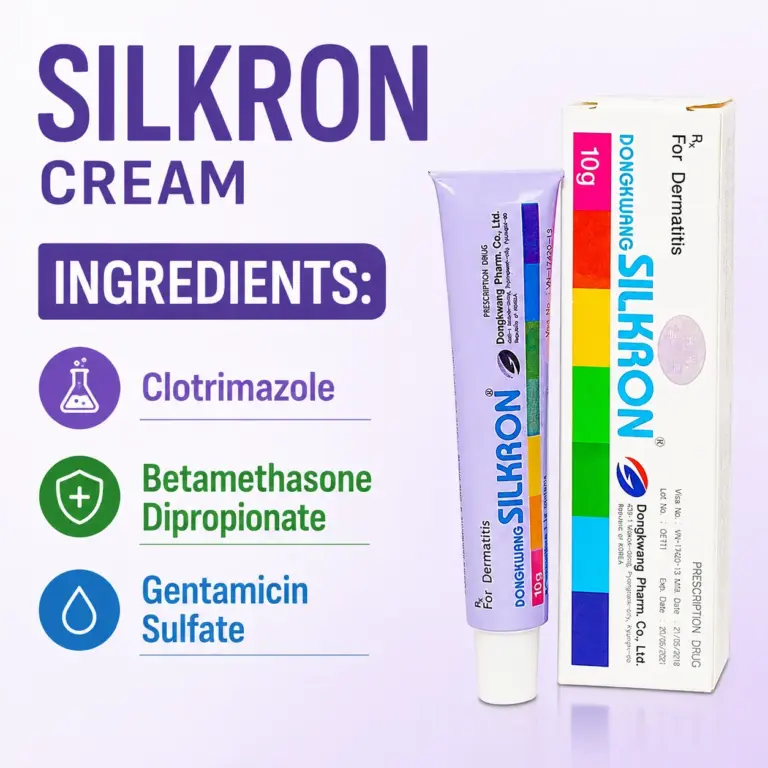
Silkron is a prescription topical cream containing clotrimazole, betamethasone dipropionate and gentamicin. Its official package insert includes specific contraindications, corticosteroid-related precautions, warnings about prolonged or occlusive use, and guidance for pregnancy, breastfeeding and concurrent aminoglycoside exposure.
What are the most important Silkron safety precautions?
The Silkron package insert makes clear that the medicine is not appropriate for every rash or skin infection. It lists several conditions in which the cream should not be used and warns that the corticosteroid component can be absorbed through the skin, particularly under certain application conditions.
The insert specifically cautions against prolonged treatment, especially under occlusion. It also includes precautions concerning large treatment areas, concurrent systemic aminoglycoside antibiotics, children, pregnancy and breastfeeding.
When the Silkron insert says the medicine should not be used
The official package insert contains a detailed contraindication list. The categories below summarize those instructions without expanding them beyond the supplied product information.
Wounds and mucous membranes
The insert lists wounds and mucous membranes among the areas where Silkron should not be used.
Certain primary skin infections
The insert lists certain primary bacterial, fungal, viral and parasitic skin infections among its contraindications and warns that symptoms may worsen.
Acne, rosacea and perioral dermatitis
Acne vulgaris, rosacea and perioral dermatitis are specifically listed as contraindications.
Hypersensitivity
Silkron should not be used in people with a history of hypersensitivity to the medicine or its components. The insert also identifies hypersensitivity to aminoglycosides and imidazoles.
Certain ear conditions
External-ear eczema associated with perforation of the tympanic membrane is listed as a contraindication.
Ulcers and significant burns
The insert lists skin ulcers, with the stated exception of Behçet disease, and second-degree or more severe burns. It notes that treatment can delay skin regeneration.
Why diagnosis matters
Some conditions listed as contraindications can resemble conditions for which a topical medicine might otherwise be considered. This is one reason Silkron's Rx status and the diagnosis behind its use are important.
For the indications stated on the product information, see Silkron Uses & Application Safety.
Topical betamethasone can be absorbed systemically
Silkron contains betamethasone dipropionate, a topical glucocorticoid corticosteroid. The package insert states that systemic absorption of topical corticosteroids can produce reversible suppression of the hypothalamic-pituitary-adrenal axis in some patients.
The insert also lists possible systemic corticosteroid effects including Cushing syndrome, hyperglycemia, glycosuria and osteoporosis.
These warnings do not mean that every person using Silkron will experience systemic effects. They explain why treatment area, duration and application conditions matter.
Avoid prolonged treatment and prolonged occlusion
The Silkron insert specifically warns against prolonged treatment, particularly under occlusive conditions, because systemic corticosteroid-like adverse effects may occur.
Large treatment areas
Treating larger skin areas can increase the relevance of systemic absorption and is specifically discussed in the corticosteroid precautions.
Occlusive dressings
Occlusion can affect absorption. The insert therefore places particular emphasis on avoiding prolonged occlusive use except in special circumstances.
Damaged skin
The pharmacokinetic information states that topical betamethasone can be absorbed systemically, particularly when applied to damaged skin or under occlusion.
Do not independently extend treatment
Because Silkron is a prescription combination medicine, treatment duration should follow the current insert and the instructions provided for the individual patient.
Application instructions
The supplied Vietnamese package insert and English outer box do not express application frequency in exactly the same way. For that reason, users should follow the current insert supplied with their own medicine and their prescriber's directions rather than combining the two statements into a new schedule.
Concurrent aminoglycoside exposure requires caution
Silkron contains gentamicin sulfate, an aminoglycoside antibiotic. The package insert states that concurrent use with systemic aminoglycoside antibiotics can increase toxicity through accumulation.
- The insert advises against continuous prolonged use except in special circumstances.
- It also advises against prolonged occlusive treatment.
- Particular caution is stated for neonates and children.
- A history of hypersensitivity to aminoglycosides such as streptomycin, kanamycin, gentamicin or neomycin is listed among the contraindications.
The role of gentamicin and the other active ingredients is explained in the Silkron Ingredients guide.
Pregnancy, breastfeeding and children
Pregnancy
The package insert states that teratogenic effects have been observed in animal studies with topical corticosteroid exposure and that safety in pregnant women has not been established.
The insert states that Silkron should not be used in pregnant women or women who may become pregnant.
Breastfeeding
The insert states that it is unknown whether topically applied corticosteroids are excreted into breast milk, while orally administered corticosteroids can appear in breast milk.
It therefore advises caution when Silkron is used by breastfeeding women.
Children
The insert calls for particular caution in neonates and children in connection with prolonged use and aminoglycoside-related toxicity concerns.
What the Silkron insert says about interactions
The supplied package insert states that no drug interactions have been reported.
However, it separately warns about concurrent systemic aminoglycoside antibiotic use because toxicity may increase through accumulation.
The insert also states that compatibility studies are not available and therefore Silkron should not be mixed with other medicines.
| Drug interactions | No reports are stated in the supplied insert. |
|---|---|
| Systemic aminoglycosides | The insert warns that concurrent use can increase toxicity through accumulation. |
| Compatibility | Because compatibility studies are unavailable, the insert states that Silkron should not be mixed with other medicines. |
| Driving and machinery | The insert reports no evidence that Silkron affects the ability to drive or operate machinery. |
Safety precautions and side effects are related but different
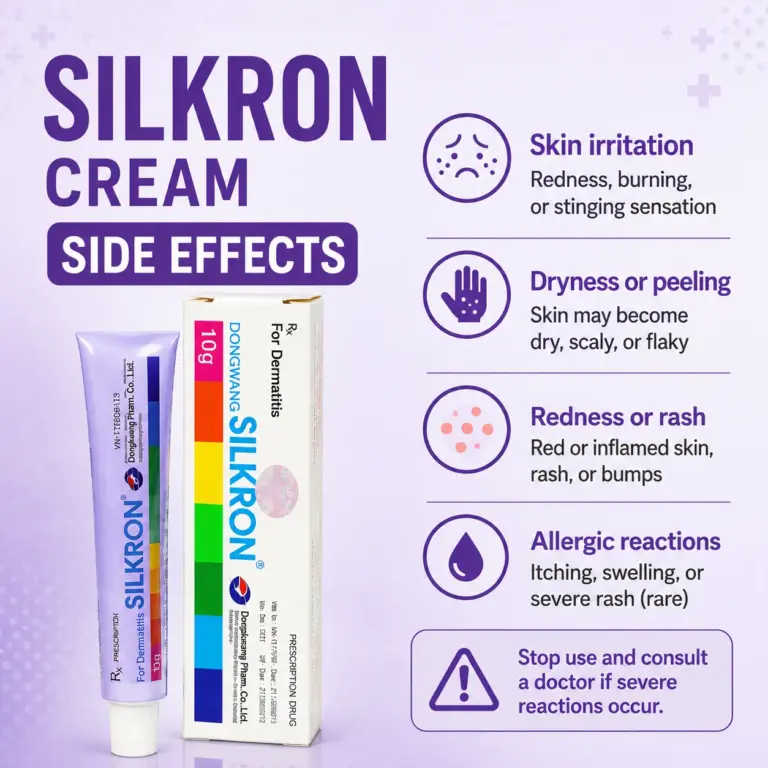
The official Silkron insert contains a separate list of possible adverse effects, including local skin reactions and other reported effects.
This safety article focuses on contraindications and precautions rather than reproducing the complete adverse reaction list. That keeps the safety and side-effects search intents separate.
What the official insert says about Silkron overdose
The supplied package insert states that the symptoms of overdose are unclear or unknown.
It advises that if overdose is suspected, the patient should promptly reach a healthcare facility and be actively monitored so that appropriate management can be provided when necessary.
Key precautions to remember
- Silkron is a prescription topical medicine.
- Check the contraindications before use.
- Do not use it on wounds or mucous membranes where the insert lists use as contraindicated.
- Avoid prolonged treatment and prolonged occlusive use except where specifically directed.
- Large treatment areas and damaged skin can make systemic absorption more relevant.
- The insert advises against use during pregnancy and calls for caution during breastfeeding.
- Concurrent systemic aminoglycoside antibiotics require particular consideration.
- Do not mix Silkron with other medicines because compatibility studies are lacking.
Always refer to the current package insert supplied with the medicine and the instructions applicable to the individual patient.
Silkron Safety & Precautions FAQ
These questions focus specifically on contraindications and precautions. For broader questions about ingredients, uses, side effects, storage and product information, visit the complete Silkron FAQ.
Yes. The supplied Silkron packaging identifies the cream as a prescription medicine for external use.
The official package insert lists wounds and mucous membranes among the contraindications.
Acne vulgaris is specifically listed among the contraindications in the supplied Silkron package insert.
The supplied package insert states that safety in pregnant women has not been established and says Silkron should not be used in pregnant women or women who may become pregnant.
The insert states that it is unknown whether topical corticosteroids pass into breast milk and advises caution in breastfeeding women.
The package insert states that compatibility studies have not been performed and therefore Silkron should not be mixed with other medicines.
The package insert states that systemic absorption of topical corticosteroids can cause reversible HPA-axis suppression and other systemic corticosteroid effects in some patients. Absorption can become more relevant under certain application conditions.
Continue with the relevant Silkron guide
For the conditions listed in the product information and application context, see Silkron Uses & Application Safety.
For the three active ingredients and complete formula, see Silkron Ingredients.
For adverse reactions listed in the insert, continue to Silkron Side Effects.
View Silkron Medicated Cream 10g
View the Silkron product page for packaging details, active ingredients, manufacturer information and current product availability. Silkron is a prescription medicine; review the current package insert and applicable professional instructions before use.