
Silkron vs Kedermfa: Ingredients, Uses & Key Differences
Silkron and Kedermfa are prescription topical creams, but they are not the same medicine. Both combine an azole antifungal with an aminoglycoside antibiotic, while Silkron also contains the corticosteroid betamethasone dipropionate. This comparison uses the official packaging and package inserts supplied for both products to explain their formulas, labeled uses and important safety differences.
What is the main difference between Silkron and Kedermfa?
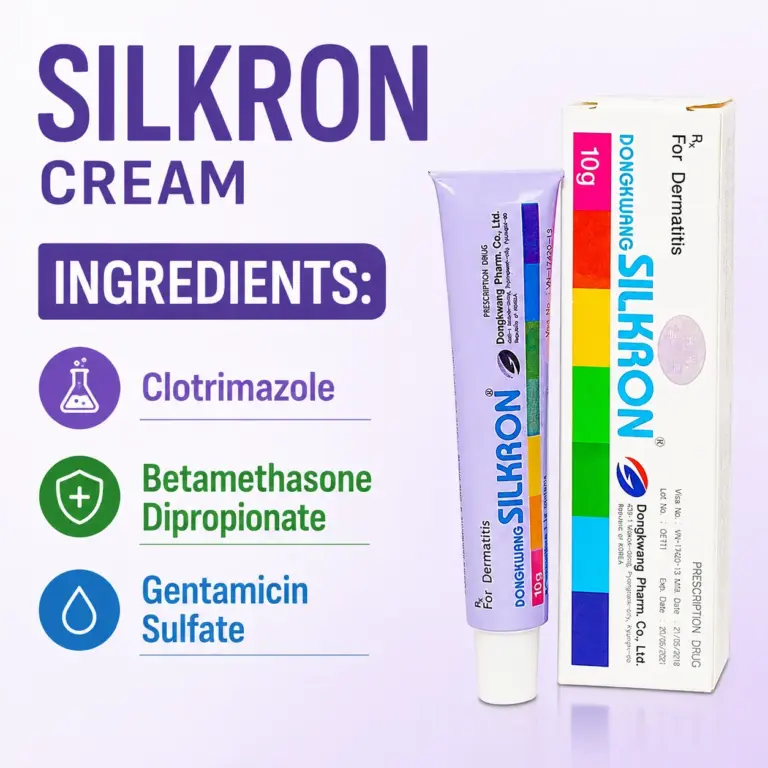
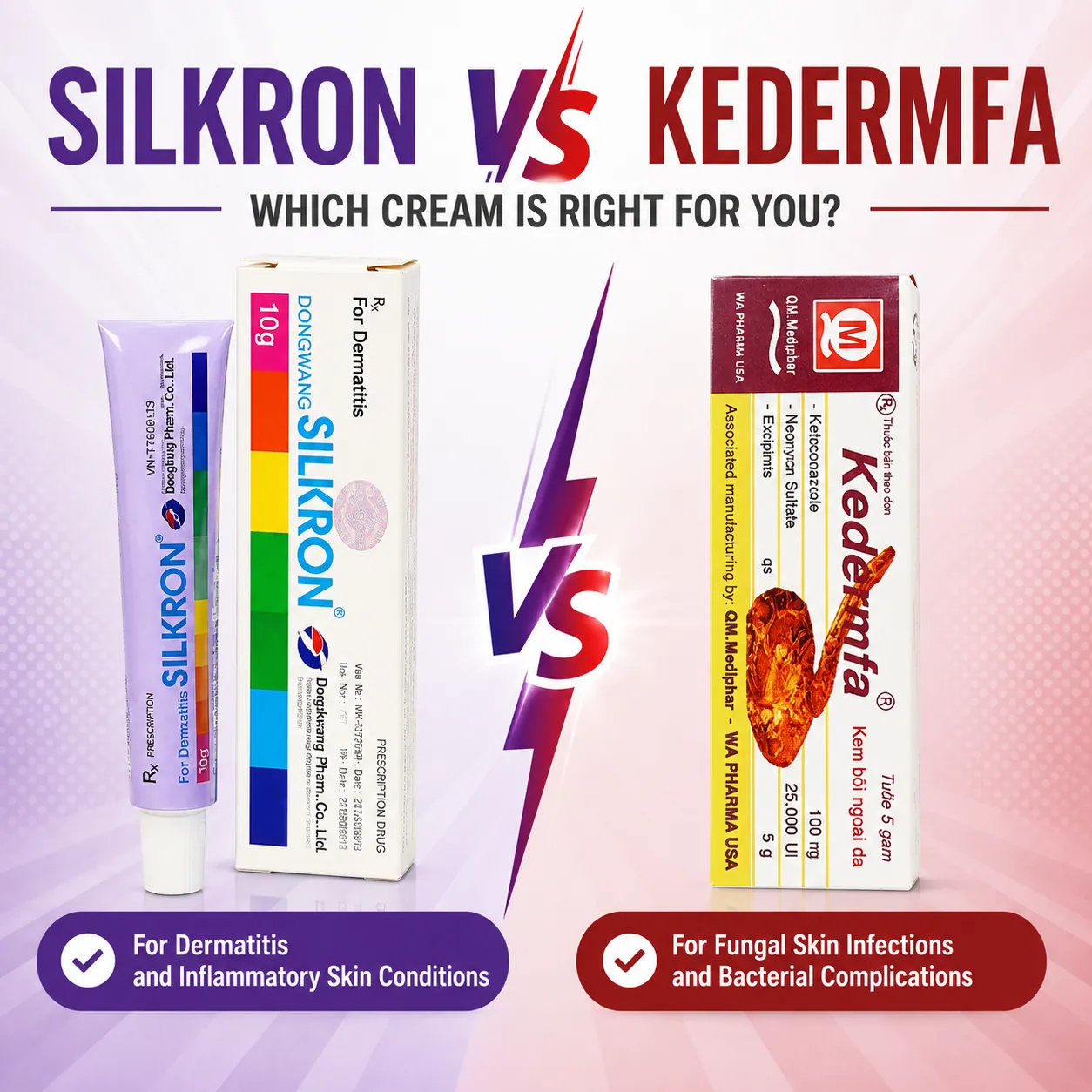
The clearest difference is the formula. Silkron contains three active ingredients: clotrimazole, betamethasone dipropionate and gentamicin sulfate. Kedermfa contains two active ingredients: ketoconazole and neomycin sulfate.
This means both products contain an azole antifungal and an aminoglycoside antibiotic, but only Silkron contains a corticosteroid. Their official indication wording is also different, so the products should not be treated as interchangeable simply because both are topical combination creams.
Silkron vs Kedermfa side by side
| Feature | Silkron | Kedermfa |
|---|---|---|
| Product type | Prescription topical cream | Prescription topical cream |
| Pack reviewed | 1 tube × 10g | 1 tube × 5g |
| Antifungal | Clotrimazole 100 mg / 10g | Ketoconazole 100 mg / 5g |
| Antibiotic | Gentamicin sulfate 10 mg potency / 10g | Neomycin sulfate 25,000 IU / 5g |
| Corticosteroid | Betamethasone dipropionate 6.4 mg / 10g | No corticosteroid listed |
| Official indication emphasis | Bacterial or fungal infection and certain corticosteroid-responsive dermatoses associated with infection; the outer box also lists several fungal skin conditions. | Local treatment of fungal skin infection with secondary bacterial infection. |
| Pregnancy | The insert states that Silkron should not be used during pregnancy. | The leaflet states not to use during pregnancy. |
| Breastfeeding | The insert advises caution during breastfeeding. | The leaflet states not to use during breastfeeding. |
| Manufacturer information | Dong Kwang Pharm Co., Ltd., South Korea | QM.Mediphar / Quang Minh Pharmaceutical information appears on the supplied materials |
Do not compare the numbers as if the units were identical
The active ingredients are reported in different units and package sizes. For example, gentamicin is stated as milligram potency on Silkron while neomycin is stated in international units on Kedermfa. The figures above reproduce the official label information rather than converting them into an unsupported claim about relative strength.
Different active ingredients define the two products
Three active ingredients
Clotrimazole · 100 mg / 10gClotrimazole is identified in the Silkron insert as an imidazole antifungal.
Betamethasone dipropionate · 6.4 mg / 10gBetamethasone dipropionate is the glucocorticoid corticosteroid component and is responsible for the steroid-specific precautions in the Silkron insert.
Gentamicin sulfate · 10 mg potency / 10gGentamicin is the aminoglycoside antibiotic component.
For the complete Silkron formula, see the Silkron Ingredients guide.
Two active ingredients
Ketoconazole · 100 mg / 5gThe Kedermfa leaflet describes ketoconazole as an imidazole antifungal with broad-spectrum activity against multiple pathogenic fungi.
Neomycin sulfate · 25,000 IU / 5gNeomycin sulfate is described as an aminoglycoside antibiotic active against many Gram-negative and Gram-positive bacteria involved in superficial skin infections.
The supplied Kedermfa formula does not list a corticosteroid component.
The corticosteroid is the biggest structural difference
Silkron's betamethasone component changes both the labeled clinical context and its safety profile. It introduces corticosteroid-specific precautions that do not appear in the supplied Kedermfa leaflet.
The official indication wording is not the same
Silkron
The supplied Vietnamese Silkron insert describes the product for bacterial or fungal infection and for corticosteroid-responsive skin diseases associated with infection.
Examples listed in the insert include allergic dermatitis, contact dermatitis, atopic dermatitis, seborrheic dermatitis, eczema, intertrigo or diaper-type rash, exfoliative dermatitis and chronic lichen simplex.
The English outer box also lists fungal conditions including forms of tinea, pityriasis versicolor and skin candidiasis.
See the dedicated Silkron Uses & Application Safety guide for the complete label-based discussion.
Similar-looking skin problems can have different causes
The products' indication lists should not be used as a self-diagnosis chart. Both are prescription medicines, and neither label supports treating every rash, itch or suspected infection with the product simply because symptoms appear similar.
The supplied directions also differ
Follow the current insert and prescription directions
The supplied Vietnamese package insert states that a sufficient amount is applied to the affected area twice daily, morning and evening.
The English outer box uses different frequency wording, stating that a proper quantity should be applied gently to the affected area once to several times daily.
Because the two supplied official materials do not state frequency in exactly the same way, this comparison does not create a new universal Silkron schedule from those statements.
Clean, dry and apply a thin layer
The Kedermfa leaflet directs users to clean and dry the affected area, then apply a thin layer of cream one to two times daily, or use it as directed by a physician.
The product is for topical use and the leaflet specifically states that it should not be swallowed.
The safety profiles should not be treated as identical
Both official leaflets include contraindications and precautions, but Silkron's corticosteroid component creates additional steroid-specific warnings.
- Silkron: the insert discusses systemic corticosteroid absorption, reversible HPA-axis suppression, Cushing syndrome, hyperglycemia, glycosuria and osteoporosis in some patients.
- Silkron: prolonged treatment, large treatment areas, damaged skin and occlusive use receive particular caution.
- Kedermfa: the leaflet warns against use on the eye mucosa and on open or bleeding wounds.
- Both: hypersensitivity to aminoglycosides is relevant because Silkron contains gentamicin and Kedermfa contains neomycin.
- Both: the supplied materials contain pregnancy restrictions, although the exact wording is not identical.
- Both: the supplied materials say not to mix the product with other medicines where compatibility data are lacking.
For the complete Silkron contraindications and warnings, see Silkron Safety & Precautions .
The two inserts report adverse effects differently
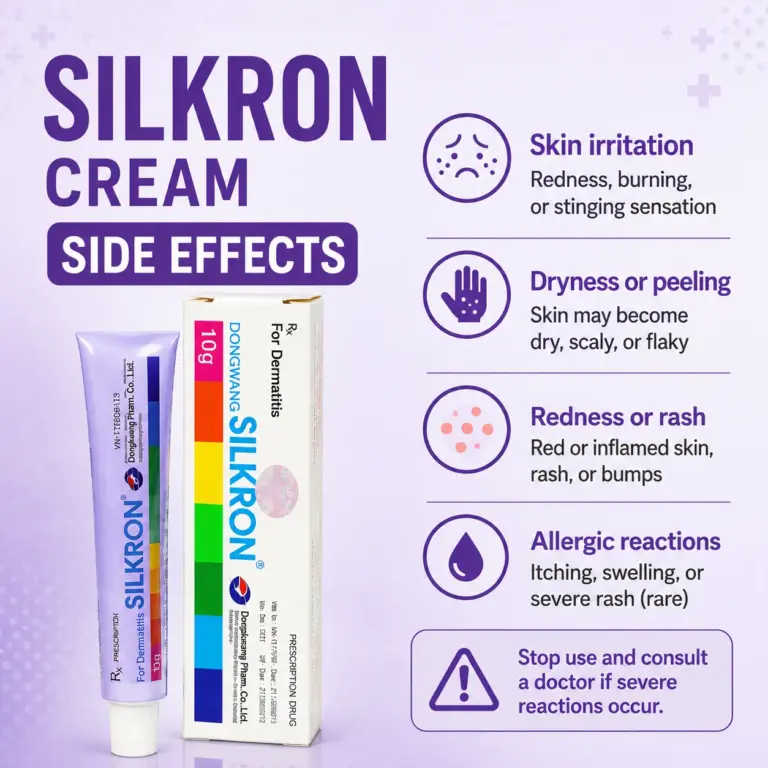
The supplied Silkron insert contains a relatively extensive adverse-effect list. It includes local reactions such as irritation, stinging, burning, rash, erythema, itching and dry skin, as well as steroid-related skin changes and several systemic or organ-related effects.
Those reactions are covered in detail in the Silkron Side Effects guide .
Pack size, storage and shelf life
| Detail | Silkron | Kedermfa |
|---|---|---|
| Pack size | 1 tube × 10g | 1 tube × 5g |
| Dosage form | White to off-white topical cream | Milky-white to slightly pale-yellow topical cream |
| Storage | Tightly closed, dry place, protected from light, not above 30°C | Cool, dry place below 30°C, protected from light |
| Shelf life | 36 months from manufacturing date | 24 months from manufacturing date |
Can Silkron and Kedermfa simply replace each other?
The official materials do not support treating Silkron and Kedermfa as direct substitutes. Their active ingredients differ, their labeled indications differ, and Silkron contains a corticosteroid that is absent from the supplied Kedermfa formula.
That corticosteroid difference is especially important because the Silkron insert contains steroid-specific contraindications and systemic-absorption precautions. Choosing between the products therefore should not be reduced to which cream appears “stronger” or contains more active ingredients.
The comparison is most useful for understanding what is actually in each product and why their official instructions are not identical.
Silkron vs Kedermfa FAQ
These questions focus specifically on the differences between the two products. For broader Silkron questions, visit the complete Silkron FAQ.
No. Silkron contains clotrimazole, betamethasone dipropionate and gentamicin sulfate. Kedermfa contains ketoconazole and neomycin sulfate.
Silkron contains betamethasone dipropionate, a corticosteroid. The supplied Kedermfa formula does not list a corticosteroid.
Yes, but not the same one. Silkron contains clotrimazole and Kedermfa contains ketoconazole. Both are described in the supplied inserts as imidazole antifungals.
Yes. Silkron contains gentamicin and Kedermfa contains neomycin. Both are aminoglycoside antibiotics.
The supplied official materials do not support treating them as direct substitutes. Their active ingredients, labeled uses and safety information differ, and both are prescription medicines.
The supplied Silkron pack contains one 10g tube, while the supplied Kedermfa pack contains one 5g tube.
Continue exploring the Silkron cluster
For the exact Silkron formula and excipients, see Silkron Ingredients.
For labeled uses and application context, see Silkron Uses & Application Safety .
For contraindications and warnings, see Silkron Safety & Precautions , or continue to Silkron Side Effects .
View Silkron 10g and Kedermfa 5g
Review each product page for packaging details, active ingredients, manufacturer information and current product availability. Both products are prescription topical medicines; follow the current package insert and applicable professional instructions.
Silkron Medicated Cream 10g
View Silkron product details, its three-active-ingredient formula and current availability.
View Silkron ProductKedermfa Cream 5g
View Kedermfa product details, its ketoconazole-neomycin formula and current availability.
View Kedermfa Product