
Counterpain Side Effects: Possible Skin Reactions & Safety Advice
DHG Pharma describes Counterpain as generally well tolerated, but itching, redness and skin rash may occur. The product information also warns that sodium lauryl sulfate in the cream can cause local soreness or a burning sensation in some users.
What Side Effects Can Counterpain Cause?
DHG Pharma states that Counterpain is generally well tolerated. The current Vietnamese product information nevertheless lists three possible local skin reactions.
DHG Pharma advises users to inform a doctor about unwanted effects experienced while using the medicine.
Can Counterpain Cause Burning or Soreness?
Yes, local irritation is addressed separately in the warnings. DHG Pharma states that the excipient sodium lauryl sulfate may cause local reactions such as soreness or a burning sensation of the skin.
The manufacturer also states that sodium lauryl sulfate may increase skin irritation caused by other products applied to the same area. This warning is separate from the listed unwanted effects of itching, redness and rash.
Do not assume pronounced burning is simply a normal effect
If a noticeable or persistent local reaction develops after application, stop applying the cream to that area and seek advice from a doctor or pharmacist when the reaction is significant, worsening or concerning.
For contraindications, age restrictions and application warnings, see the dedicated Counterpain Safety & Precautions guide.
Who May Be More Sensitive to Local Irritation?
DHG Pharma specifically notes that people with reduced skin-barrier function, including people with atopic dermatitis, may be more sensitive to the irritant properties of sodium lauryl sulfate.
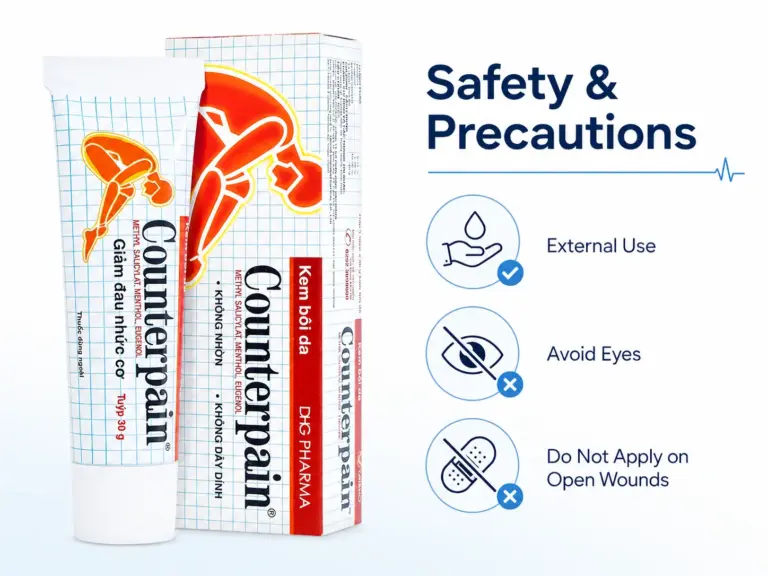
Practical takeaway: Counterpain should be applied only to intact skin. The product information says not to apply it to open wounds or to infected or damaged skin.
Because sodium lauryl sulfate may increase irritation produced by other products on the same site, avoid casually layering multiple topical products over the same area without appropriate professional advice.
What Should You Do If a Reaction Appears?
If itching, redness, rash, significant burning or another concerning local reaction appears after using Counterpain, stop applying it to the affected area and avoid further irritation.
- Do not apply another layer over skin that has become irritated.
- Do not apply the cream to infected, damaged or open skin.
- Avoid contact with the eyes and mucous membranes.
- Do not take Counterpain by mouth; the product is for external use only.
- Ask a doctor or pharmacist for advice if the reaction is significant or does not settle.
- Tell a doctor about unwanted effects experienced during use, as advised by the manufacturer.
If you are checking whether Counterpain is appropriate before first use, review the broader Counterpain Safety & Precautions article.
How Is This Different From Counterpain Safety & Precautions?
The topics overlap but answer different questions. This article focuses on reactions that may occur during use. The safety article focuses more broadly on contraindications, age restrictions, where the cream should not be applied and other precautions before and during use.
Are Counterpain Side Effects Linked to a Specific Ingredient?
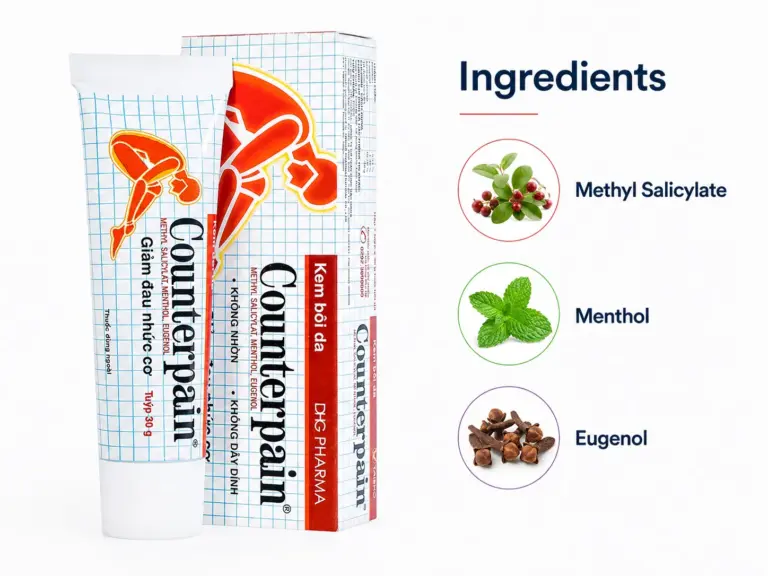
DHG Pharma lists methyl salicylate 10.20%, menthol 5.44% and eugenol 1.36% as active ingredients. The product information does not attribute the listed itching, redness or rash to one specific active ingredient.
For that reason, this article does not guess which active ingredient is responsible for an individual reaction. Counterpain is contraindicated in people who are hypersensitive to any ingredient in the medicine.
Sodium lauryl sulfate is specifically discussed in the warning section because it may itself cause local irritation or increase irritation from another product used on the same area.
Counterpain Side Effects FAQ
What are the listed Counterpain side effects?
DHG Pharma's current Vietnamese product information lists itching, redness and skin rash, while describing the medicine as generally well tolerated.
Can Counterpain cause a burning sensation?
The warning about sodium lauryl sulfate states that local reactions such as soreness or burning of the skin may occur.
Should Counterpain be applied over irritated skin?
Counterpain should be used only on intact skin and should not be applied to infected or damaged areas. If a concerning reaction develops, stop applying it to the affected area.
Can Counterpain be used on damaged skin?
No. DHG Pharma says not to apply it to skin wounds, open wounds, infected skin or damaged skin.
Who may be more sensitive to sodium lauryl sulfate irritation?
DHG Pharma notes that people with reduced skin-barrier function, such as those with atopic dermatitis, may be more sensitive to its irritant properties.
Where can I find broader Counterpain safety information?
See Counterpain Safety & Precautions for contraindications, age restrictions and application warnings.
What This Side-Effects Guide Is Based On
The primary source is the current DHG Pharma Counterpain product information, including the sections on unwanted effects, contraindications, warnings, formula and topical use.
The information was cross-checked against Nhà thuốc Long Châu's Counterpain 30g product information.
This article intentionally avoids assigning frequency categories or a specific active-ingredient cause where the manufacturer does not provide that information.
More Counterpain Information
Side effects are one part of using Counterpain appropriately. Continue with the central hub or the dedicated safety, ingredients and application guides.