
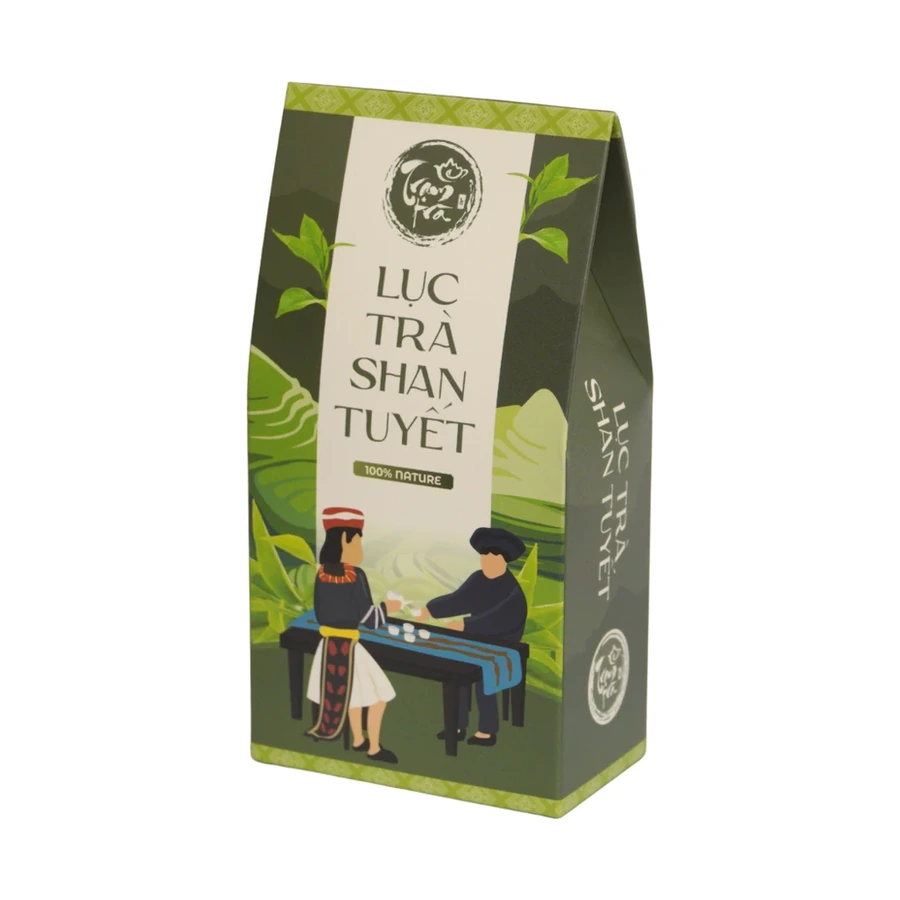
Ancient Shan Tuyet Green Tea is one of Vietnam’s most distinctive specialty teas. It is made from young buds and leaves harvested from ancient Shan Tuyet tea trees growing in the misty mountains of Ha Giang Province in northern Vietnam.
Unlike tea from large commercial plantations, ancient Shan Tuyet tea develops slowly in a cool, high-altitude environment. The finished tea is known for its fresh mountain aroma, smooth vegetal character, gentle natural bitterness, and lingering sweet aftertaste.
Discover our Ancient Shan Tuyet Green Tea – 1 Bud 1 Leaf, 200g, carefully selected for tea drinkers looking for an authentic taste of Vietnam’s northern highlands.
Complete List
- What Is Ancient Shan Tuyet Green Tea?
- What Does Shan Tuyet Mean?
- The Origin of Shan Tuyet Green Tea in Ha Giang
- Ideal Growing Conditions in the Northern Mountains
- What Makes Ancient Shan Tuyet Tea Trees Special?
- What Does 1 Bud 1 Leaf Mean?
- How Ancient Shan Tuyet Green Tea Is Produced
- Appearance, Aroma and Flavor Profile
- Shan Tuyet vs. Ordinary Green Tea
- Potential Benefits of Shan Tuyet Green Tea
- Does Ancient Shan Tuyet Green Tea Contain Caffeine?
- How to Brew Ancient Shan Tuyet Green Tea
- Common Brewing Mistakes to Avoid
- Best Time to Drink Shan Tuyet Green Tea
- How to Store Shan Tuyet Green Tea
- Who Should Choose Ancient Shan Tuyet Green Tea?
- Why Choose Shan Tuyet Tea from Volga Trading?
- Shop Ancient Shan Tuyet Green Tea
- Related Shan Tuyet Teas
- Frequently Asked Questions
- Final Thoughts
What Is Ancient Shan Tuyet Green Tea?
Ancient Shan Tuyet Green Tea, known in Vietnamese as lục trà Shan Tuyết cổ thụ, is a green tea made from the buds and young leaves of mature Shan Tuyet tea trees.
These trees grow in remote mountainous areas of northern Vietnam, particularly Ha Giang. Many are considerably taller and older than the small, regularly trimmed tea bushes commonly found on commercial plantations.
After harvesting, the fresh leaves are heated relatively quickly to limit oxidation. This helps preserve their green character, natural fragrance, and fresh flavor.
What Does Shan Tuyet Mean?
The name Shan Tuyet is closely associated with the high-mountain origin and distinctive appearance of the tea.
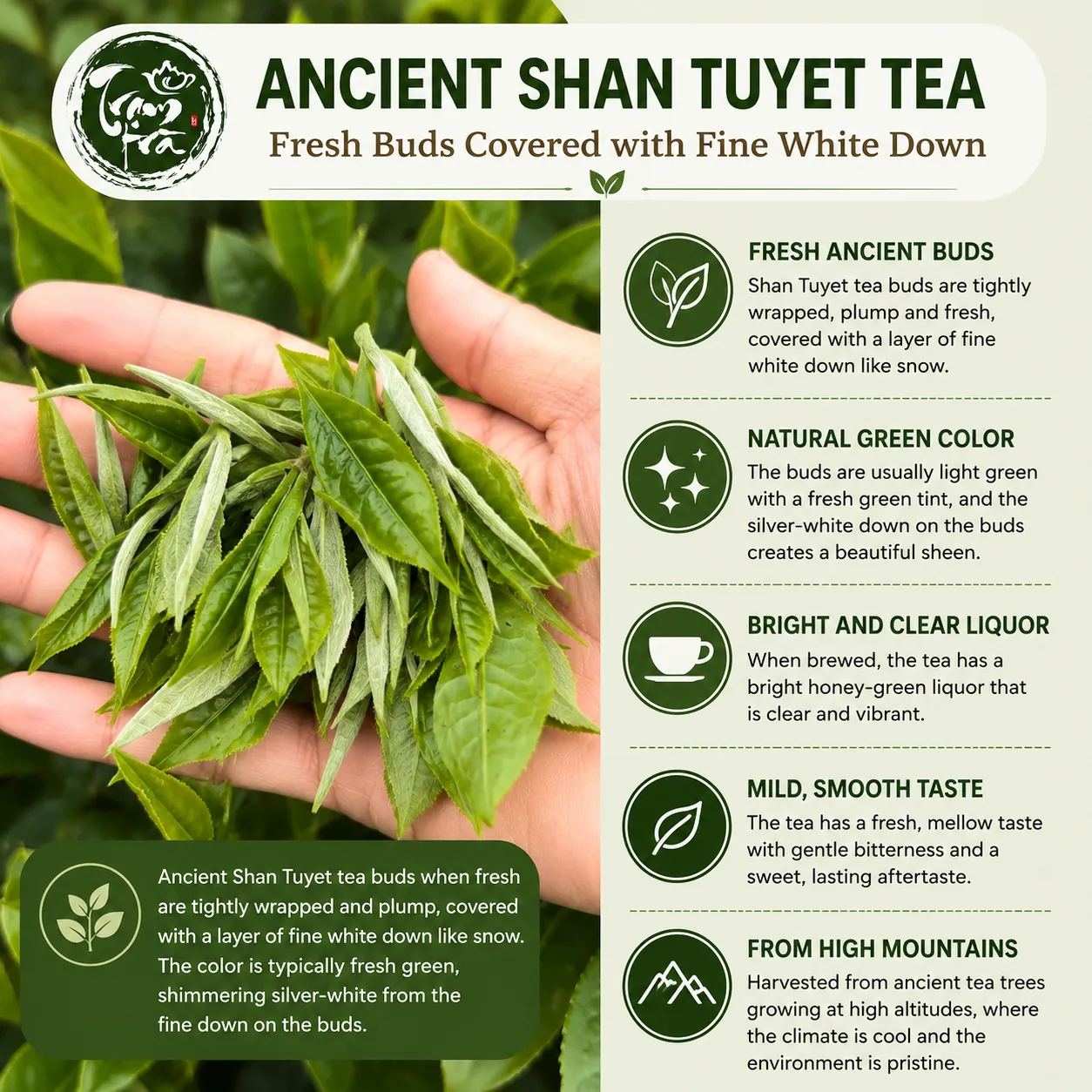
One of its most recognizable characteristics is the layer of fine silvery-white hairs covering high-quality young tea buds. Under natural light, these delicate hairs can give the buds a snow-like appearance, which is why Shan Tuyet is commonly translated or described as “snow tea.”
The Origin of Shan Tuyet Green Tea in Ha Giang
Ha Giang is one of Vietnam’s best-known regions for ancient Shan Tuyet tea. Located in the far north of the country, the province is characterized by dramatic mountains, cool temperatures, misty forests, and long-established tea-growing communities.
Ancient tea trees grow in several highland areas where local communities have harvested and processed tea for generations. Tea production remains closely connected with local culture, livelihoods, and traditional knowledge.
The combination of old tea trees, high-mountain growing conditions, and traditional craftsmanship gives Ha Giang Shan Tuyet Green Tea its distinctive regional identity.
Ideal Growing Conditions in the Northern Mountains
Ancient Shan Tuyet tea trees develop in an environment that differs considerably from lowland commercial tea plantations. Typical conditions include:
- High elevations and cooler temperatures
- Frequent mist and mountain humidity
- Noticeable differences between daytime and nighttime temperatures
- Natural forest biodiversity
- Mountain soils
- Relatively slow leaf growth
Slow growth can contribute to a concentrated aroma and complex flavor profile. The surrounding ecosystem is also an important part of the character associated with traditional mountain-grown Shan Tuyet tea.
What Makes Ancient Shan Tuyet Tea Trees Special?
Ancient Shan Tuyet trees look very different from the low, evenly trimmed bushes found on many modern tea plantations.
They can grow several meters tall and develop thick trunks and extensive branches. Harvesters may need to reach high into the tree or climb carefully to collect the youngest buds and leaves.
Older trees also have well-established root systems extending through different layers of mountain soil. Tea enthusiasts often associate ancient-tree teas with greater depth, complexity, and a longer-lasting aftertaste.
Tree age alone does not determine quality. Harvesting standards, weather conditions, processing, packaging, and storage all influence the finished tea.
What Does 1 Bud 1 Leaf Mean?
1 Bud 1 Leaf describes a premium picking standard in which each harvested shoot consists of one tender bud and the first young leaf immediately beneath it.
The young bud contributes fragrance, delicacy, and a soft texture, while the first leaf adds more body and flavor to the infusion.
This careful harvesting method requires more time and labor than picking larger or more mature leaves, but it can produce a refined and balanced green tea.
How Ancient Shan Tuyet Green Tea Is Produced
Green tea production is designed to restrict oxidation soon after the leaves are harvested. Exact methods vary between producers, but the main stages generally include picking, controlled withering, heat-fixing, rolling, and drying.
Hand-Picking the Tea Buds and Leaves
Young buds and leaves are carefully selected from the tea trees. Good picking practices help maintain leaf quality and ensure that the harvested material meets the desired grade.
Withering
Fresh leaves may be spread in a thin layer for a limited period, allowing some surface moisture to evaporate and making the leaves easier to process.
Heat-Fixing
The leaves are heated to reduce the activity of enzymes responsible for oxidation. This is one of the most important stages in preserving the fresh green-tea character.
Rolling and Shaping
After heating, the softened leaves are rolled or shaped. This gives the finished leaves their characteristic appearance and helps flavor compounds release during brewing.
Drying and Finishing
The leaves are dried to reduce moisture and stabilize them for storage. They are then sorted and packed to protect them from humidity, light, air, and strong odors.
Appearance, Aroma and Flavor Profile
Ancient Shan Tuyet Green Tea has a layered sensory profile that can change from one infusion to the next. Water temperature, leaf quantity, brewing time, and water quality all affect the final cup.
Dry Leaves
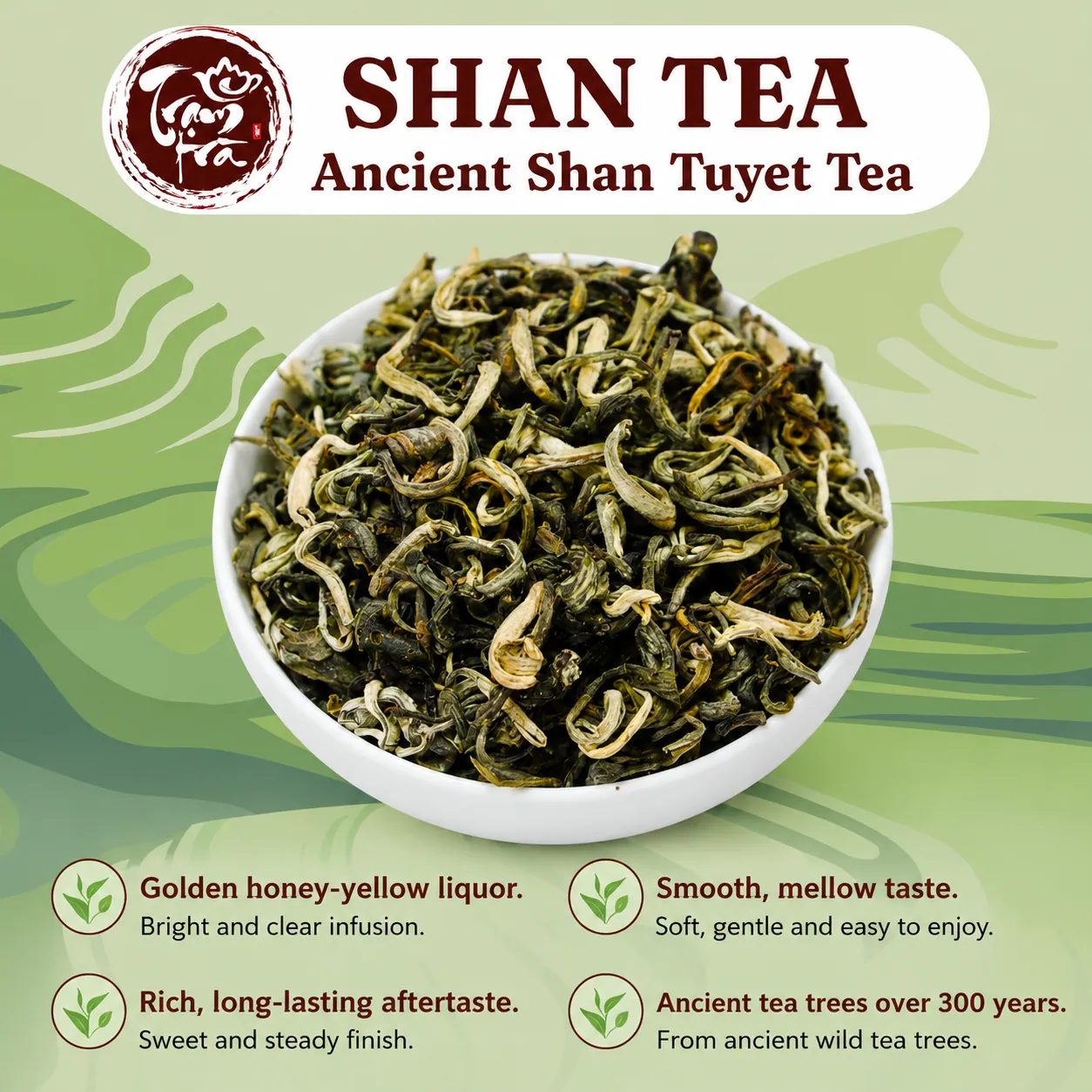
The finished leaves commonly have a twisted or loosely rolled appearance, ranging from deep green to olive green. Pale or silvery hairs from the young buds may remain visible.
Tea Liquor
When brewed correctly, the tea liquor may range from pale yellow-green to lightly golden.
Aroma
The fragrance may include fresh leaves, mountain herbs, subtle floral notes, young wood, and gentle roasted characteristics created during processing.
Taste and Aftertaste
A typical cup begins with fresh vegetal notes and mild natural bitterness before developing into a smoother sweetness that can linger in the mouth and throat.
- Fresh vegetal character
- Light floral fragrance
- Subtle mountain-herb notes
- Gentle natural bitterness
- Smooth mouthfeel
- Lingering sweet aftertaste
Shan Tuyet vs. Ordinary Green Tea
Both Shan Tuyet Green Tea and conventional green tea are processed to limit oxidation, but their raw materials and growing conditions can be very different.
- Tea plants: Shan Tuyet comes from mature mountain tea trees rather than uniformly trimmed plantation bushes.
- Growing environment: Ancient trees grow in cool, high-altitude regions, often close to natural forests.
- Harvesting: Premium buds and leaves are generally picked by hand.
- Leaf appearance: Young Shan Tuyet buds often display distinctive silvery-white hairs.
- Flavor: Shan Tuyet may offer greater depth, fuller texture, and a lingering sweet finish.
- Multiple infusions: Quality leaves can retain aroma and flavor through several brews.
Shan Tuyet is therefore more than simply another type of green tea. It reflects a particular landscape, tea-tree heritage, and traditional tea-making culture.
Potential Benefits of Shan Tuyet Green Tea
Like other true green teas, Shan Tuyet naturally contains polyphenols, catechins, amino acids, caffeine, and other plant compounds. The amount extracted into each cup varies according to the leaves and brewing method.
A Natural Source of Antioxidants
Green tea naturally contains antioxidant compounds, including polyphenols and catechins. This is one reason green tea is widely included as part of balanced diets and everyday tea-drinking traditions.
Supports Alertness
Shan Tuyet Green Tea naturally contains caffeine. A cup may provide a mild stimulating effect, which is why many people enjoy green tea while working, reading, or studying.
A Refreshing Drink After Meals
The fresh aroma and gentle bitterness of green tea make it a popular beverage after food. People with sensitive stomachs may prefer drinking tea after eating rather than on an empty stomach.
A Relaxing Tea Ritual
The process of preparing loose-leaf tea can also encourage a slower pace: warming the teaware, measuring the leaves, observing each infusion, and tasting how the flavor develops.
This information is provided for general educational purposes and should not be interpreted as medical advice.
Does Ancient Shan Tuyet Green Tea Contain Caffeine?
Yes. Ancient Shan Tuyet Green Tea naturally contains caffeine because it is produced from the leaves of the tea plant.
The amount of caffeine in a brewed cup varies according to factors such as:
- Amount of tea used
- Proportion of young buds
- Water temperature
- Steeping time
- Brewing method
People who are sensitive to caffeine may prefer smaller quantities, shorter brewing times, or drinking the tea earlier in the day.
How to Brew Ancient Shan Tuyet Green Tea
Correct brewing helps reveal the fragrance and sweetness of Shan Tuyet while preventing excessive bitterness.
Recommended Brewing Equipment
You can prepare Shan Tuyet Green Tea using a porcelain gaiwan, small ceramic teapot, glass teapot, or a simple tea strainer and heat-resistant cup.
Best Water Temperature
Use water at approximately 80–90°C (176–194°F). Around 85°C is a practical starting point.
Very hot water can extract bitterness rapidly, while slightly cooler water generally produces a softer and more aromatic cup.
Tea-to-Water Ratio
A useful starting ratio is:
- 5–8g of tea
- 150–200ml of water
Step-by-Step Brewing Instructions
- Heat water to approximately 80–90°C.
- Warm the teapot or gaiwan and discard the warming water.
- Add 5–8g of Shan Tuyet Green Tea.
- Pour hot water over the leaves.
- Steep for approximately 20–40 seconds for the first infusion.
- Pour the tea completely into the serving cup or pitcher.
- Taste and adjust the next infusion according to your preference.
Brewing Multiple Infusions
High-quality Shan Tuyet leaves can usually be infused several times. Increase later brewing times gradually depending on the strength of the previous infusion.
The tea often changes throughout the session: early infusions emphasize fragrance and freshness, middle infusions reveal more body and sweetness, and later infusions become progressively softer.
Common Brewing Mistakes to Avoid
- Using excessively hot water: This can create unnecessary bitterness.
- Steeping for too long: Start with shorter infusions and increase gradually.
- Leaving water with the leaves: Pour each infusion out completely.
- Using unsuitable water: Strongly chlorinated water may interfere with delicate tea aromas.
- Using too many leaves: Higher leaf ratios require shorter brewing times.
- Judging the tea after one infusion: Shan Tuyet often develops noticeably over several brews.
Best Time to Drink Shan Tuyet Green Tea
Many tea drinkers enjoy Shan Tuyet Green Tea during the morning or early afternoon because it naturally contains caffeine.
It can be enjoyed after breakfast or lunch, during work or study, while welcoming guests, or simply as part of a quiet tea session.
Those sensitive to caffeine may prefer not to drink it close to bedtime.
How to Store Shan Tuyet Green Tea
Green tea is sensitive to air, heat, humidity, light, and strong odors. Proper storage helps preserve its natural aroma and freshness.
- Keep the tea in an airtight package or container.
- Store it in a cool, dry place.
- Protect it from direct sunlight.
- Keep it away from coffee, spices, perfume, and other strong odors.
- Always use clean and dry utensils.
- Close the package immediately after use.
Who Should Choose Ancient Shan Tuyet Green Tea?
Ancient Shan Tuyet Green Tea may appeal particularly to:
- Tea drinkers exploring authentic Vietnamese teas
- Green-tea enthusiasts seeking more complex flavors
- People interested in ancient-tree teas
- Tea lovers who enjoy multiple infusions
- Customers looking for a distinctive Vietnamese gift
- Anyone interested in the tea culture of northern Vietnam
Beginners can also enjoy Shan Tuyet by starting with fewer leaves, slightly cooler water, and shorter infusion times.
Why Choose Shan Tuyet Tea from Volga Trading?
Volga Trading introduces authentic Vietnamese products to customers worldwide. Our Shan Tuyet collection highlights the distinctive character of mountain-grown tea from Ha Giang.
- Authentic Vietnamese origin
- Premium 1 Bud 1 Leaf picking grade
- Tea harvested from ancient Shan Tuyet trees
- Traditional green-tea processing
- Carefully packed to help protect freshness
- Suitable for personal use or gifting
- Worldwide shipping with tracking
Shop Ancient Shan Tuyet Green Tea
Experience the fresh mountain fragrance, gentle bitterness, smooth texture, and naturally sweet finish of Vietnamese Shan Tuyet Green Tea.
Shop Ancient Shan Tuyet Green Tea – 1 Bud 1 Leaf, 200g
Related Shan Tuyet Teas
The same ancient Shan Tuyet tea leaves can be processed in different ways to produce teas with very different aromas, colors, and flavor profiles.
- Ancient Shan Tuyet Green Tea – 1 Bud 1 Leaf, 200g
- Ha Giang Ancient Shan Tuyet White Tea, 200g
- Ha Giang Ancient Tree Shan Tuyet Black Tea, 200g
Frequently Asked Questions
Is Shan Tuyet Green Tea the Same as Regular Green Tea?
No. Although both are green teas, Shan Tuyet is produced from mountain-grown tea trees known for their large leaves and silvery young buds. Its growing environment, tea-tree characteristics, and traditional processing give it a distinctive flavor profile.
Is Shan Tuyet Green Tea Bitter?
It can have a gentle natural bitterness. When prepared using suitable water temperature and shorter steeping times, this bitterness is usually balanced by a smoother texture and lingering sweetness.
How Many Times Can Shan Tuyet Tea Be Brewed?
Good-quality leaves can generally be brewed several times. Continue brewing while the leaves retain a pleasant aroma and flavor.
Is Shan Tuyet Green Tea Suitable for Beginners?
Yes. Beginners can start with approximately 5g of tea, water around 80–85°C, and a short first infusion.
Should Milk or Sugar Be Added?
Shan Tuyet Green Tea is traditionally enjoyed without milk or sugar so that its natural aroma, texture, and sweet aftertaste remain clear.
Where Does Authentic Shan Tuyet Tea Come From?
Shan Tuyet tea is closely associated with the mountainous regions of northern Vietnam. Ha Giang is particularly famous for its ancient tea trees and long-established tea-making communities.
Final Thoughts
Ancient Shan Tuyet Green Tea reflects the landscape and tea heritage of Vietnam’s northern mountains. Its silvery buds, carefully selected young leaves, traditional processing, fresh aroma, gentle bitterness, and lingering sweetness give it a character that is noticeably different from ordinary plantation green tea.
Whether you are discovering Vietnamese tea for the first time or expanding an established tea collection, Shan Tuyet Green Tea offers an excellent introduction to the ancient tea trees and high-mountain tea culture of Ha Giang.