

Crinum latifolium, commonly known in Vietnam as Trinh Nu Hoang Cung, is a medicinal plant traditionally associated with women’s reproductive health and men’s prostate health. In recent decades, researchers have investigated its botanical characteristics, alkaloid content and potential biological activities.
What is Crinum latifolium used for, and what does scientific research actually show? This article reviews its traditional applications, important plant compounds, current research findings and essential safety considerations.
What Is Crinum Latifolium?
Crinum latifolium L. is a perennial flowering plant belonging to the Amaryllidaceae family. It has an underground bulb, long strap-shaped leaves and clusters of white or pale pink flowers.
The plant grows in tropical and subtropical parts of Asia, including Vietnam. Its leaves have been used in Vietnamese traditional medicine, particularly in preparations associated with uterine health and urinary symptoms in men.
Crinum latifolium should not be confused with other visually similar plants in the Crinum genus. Correct botanical identification is important because different species may have different chemical compositions and safety profiles.
Active Compounds in Crinum Latifolium
The most extensively studied compounds in Crinum latifolium are Amaryllidaceae alkaloids. Researchers have identified several alkaloids and related substances in extracts obtained from the plant.
Reported compounds include:
- Lycorine
- Crinine-type alkaloids
- Haemanthamine-related compounds
- Tazettine-related compounds
- Other phenolic and plant-derived constituents
The exact composition may vary depending on the plant variety, growing conditions, harvesting time, plant part and extraction method. A standardized extract may therefore differ considerably from homemade tea or preparations made from unidentified leaves.
Potential Benefits and Traditional Uses
1. Support for Women With Uterine Fibroids
Uterine fibroids are noncancerous growths that develop from the muscular tissue of the uterus. Some women experience no symptoms, while others may have heavy menstrual bleeding, pelvic pressure, discomfort, frequent urination or fertility-related concerns.
In Vietnamese traditional use, Crinum latifolium has been associated with preparations intended to support women experiencing symptoms related to uterine fibroids.
Laboratory investigations have examined the effects of plant extracts and isolated compounds on cell growth and other biological pathways. However, laboratory activity does not prove that an herbal product can shrink or eliminate uterine fibroids in people.
Anyone diagnosed with uterine fibroids should continue medical monitoring. Ultrasound examinations and professional evaluation are important for determining the size, location and progression of the fibroids.
2. Support for Benign Prostatic Hyperplasia Symptoms
Benign prostatic hyperplasia, or BPH, is a noncancerous enlargement of the prostate gland that commonly affects older men. It may cause urinary symptoms such as:
- Difficulty beginning urination
- A weak or interrupted urine stream
- Frequent urination, particularly at night
- A feeling that the bladder has not emptied completely
- Urgent need to urinate
Crinum latifolium has traditionally been used in products intended to support prostate and urinary health. In-vitro research has examined standardized leaf extracts and isolated alkaloids for their effects on prostate stromal cells and experimental cellular models associated with prostate enlargement.
These findings are scientifically interesting, but they should not be interpreted as proof that Crinum latifolium can replace prescription medicines, medical procedures or prostate cancer screening.
3. Antiproliferative Activity in Laboratory Studies
Several studies have investigated the effects of Crinum latifolium extracts on cultured cells. Some extracts have demonstrated antiproliferative activity against selected prostate-derived cell lines under laboratory conditions.
This type of research may help scientists identify potentially useful plant compounds. Nevertheless, an effect observed in cultured cells does not establish that the same substance will be effective or safe as a cancer treatment in humans.
Crinum latifolium products should not be promoted or used as a substitute for cancer diagnosis, chemotherapy, radiotherapy, surgery or other treatment recommended by a qualified medical professional.
4. Antioxidant and Inflammation-Related Research
Laboratory studies have also reported antioxidant activity and effects on certain immune and inflammation-related pathways. These results may partly explain why the plant has attracted attention in traditional medicine and pharmacological research.
However, researchers have not yet established a standard therapeutic dose for using the plant specifically as an antioxidant or anti-inflammatory treatment in the general population.
What Scientific Research Shows
Phytochemical Research
Phytochemical studies have confirmed that Crinum latifolium contains multiple alkaloids and other biologically active plant compounds. These findings provide a scientific basis for investigating the plant, but chemical identification alone does not confirm a clinical benefit.
Prostate Cell Research
A study indexed by PubMed evaluated an ethanolic extract of Crinum latifolium leaves and isolated bioactive markers using a prostate stromal cell model. The researchers reported antiproliferative activity in the experimental model and proposed the identified compounds as possible markers for extract standardization.
Another laboratory study reported effects of an aqueous leaf extract on immune activation pathways and several prostate-derived cell lines. Because these experiments were conducted outside the human body, clinical effectiveness cannot be assumed from the results alone.
Evidence for Uterine Fibroids
Crinum latifolium and Crila preparations have been discussed in relation to uterine fibroids in Vietnam. However, publicly accessible, independently replicated, large-scale clinical evidence remains limited.
More well-designed randomized controlled trials are needed to determine:
- Which patients may benefit
- The most appropriate dosage
- The recommended duration of use
- Possible interactions with medicines
- Long-term safety
- Whether benefits exceed those of placebo or standard care
Traditional Use Versus Proven Medical Effect
Traditional use, laboratory evidence and clinical proof are not the same:
- Traditional use describes how a plant has historically been used.
- Laboratory evidence evaluates extracts or compounds in cells, tissues or experimental models.
- Clinical evidence evaluates safety and effectiveness in people through properly designed studies.
Crinum latifolium has a meaningful history of traditional use and promising laboratory findings. Nevertheless, stronger independent clinical evidence is still necessary before broad treatment claims can be made.
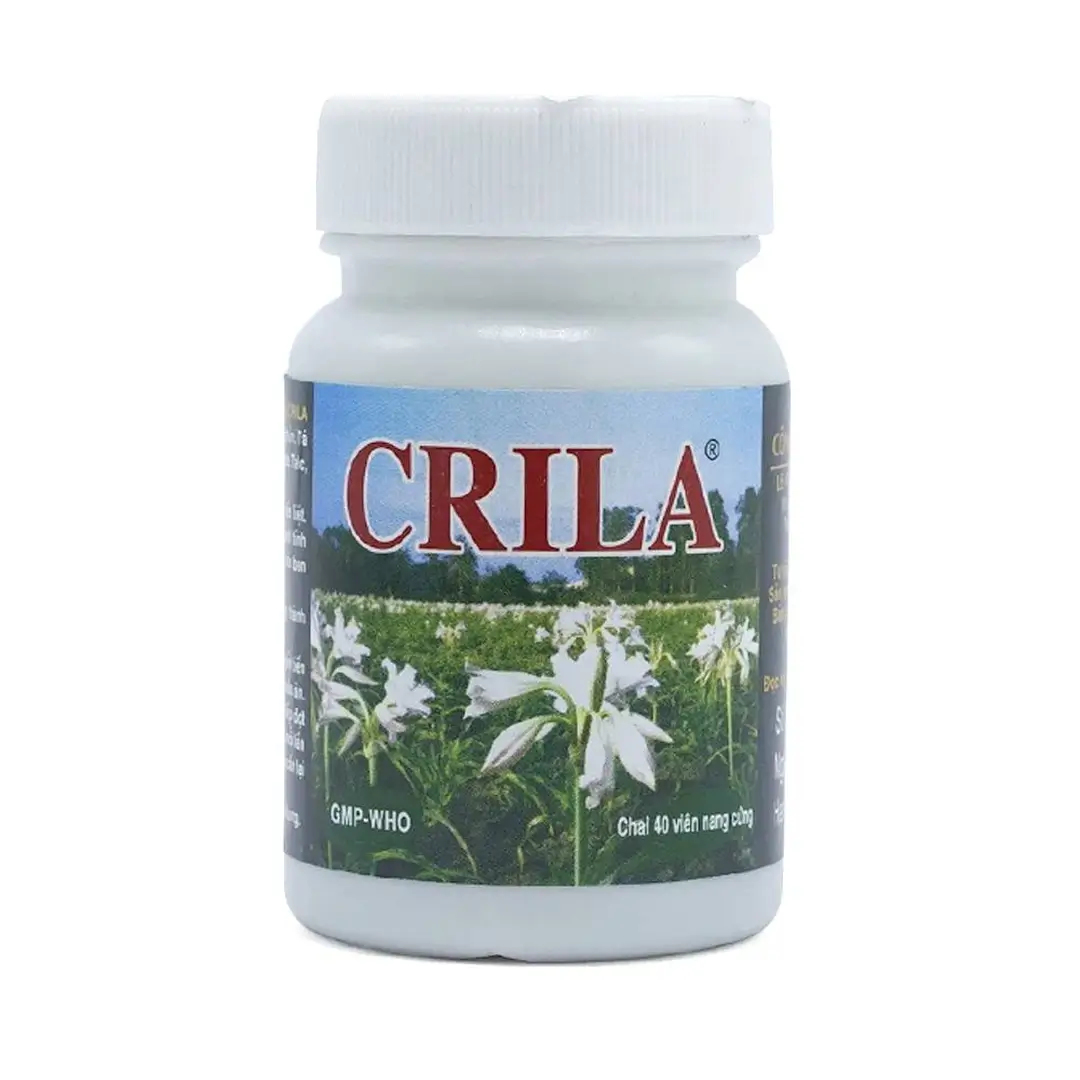
Crila Capsules 250mg by Thien Duoc
Crila Capsules 250mg by Thien Duoc are made with dry extract derived from Crinum latifolium leaves. Each package contains 160 capsules.
Compared with unidentified fresh or dried leaves, a manufactured extract offers greater consistency in identification, preparation and dosage. Consumers should still read the product packaging carefully and follow the approved instructions supplied with the product.
Product characteristics may include:
- Crinum latifolium leaf dry extract
- 250mg capsule strength
- 160 capsules per package
- Manufactured in Vietnam
- Produced by Thien Duoc
View Crila Capsules 250mg by Thien Duoc at Volga Trading.
How Should Crinum Latifolium Products Be Used?
Use the product only according to its official packaging, patient information leaflet or instructions provided by a qualified healthcare professional. Dosage may differ between products because extracts are not necessarily equivalent.
Do not copy the dosage of one Crinum latifolium product when using another brand or preparation. Differences in extraction method and concentration may result in very different amounts of active compounds.
Do not increase the dose in an attempt to obtain faster results. Herbal products can produce adverse effects and interact with medicines when used incorrectly.
Possible Side Effects
Safety information for Crinum latifolium remains less extensive than the information available for many established medicines. Possible reactions may include:
- Digestive discomfort
- Nausea
- Abdominal discomfort
- Changes in bowel movements
- Headache or dizziness
- Allergic reactions in sensitive individuals
Stop using the product and seek medical assistance if unusual or severe symptoms occur.
Warnings and Precautions
Consult a doctor or pharmacist before using Crinum latifolium when:
- You are pregnant, planning pregnancy or breastfeeding
- You are undergoing fertility treatment
- You have unexplained vaginal bleeding
- You have severe pelvic pain
- You have difficulty urinating or cannot urinate
- You have blood in the urine
- You have liver or kidney disease
- You are taking prescription medicines
- You are preparing for surgery
- You have been diagnosed with cancer or are receiving cancer treatment
Women with heavy bleeding, rapidly worsening pelvic symptoms or suspected pregnancy should seek medical evaluation rather than relying on self-treatment.
Men with urinary symptoms should receive an appropriate prostate assessment. Symptoms of benign prostate enlargement can overlap with urinary infection, bladder disorders and prostate cancer.
Can Crinum Latifolium Be Used With Other Medicines?
Reliable information about all possible herb–medicine interactions is not yet available. Caution is particularly important for people using:
- Hormonal medicines
- Medicines for prostate conditions
- Blood-thinning medicines
- Immunosuppressive medicines
- Cancer treatments
- Medicines processed extensively by the liver
A healthcare professional should review the complete list of medicines, supplements and herbal products being used.
How to Store Crinum Latifolium Capsules
- Keep the product in its original packaging.
- Store it in a cool, dry place.
- Protect it from direct sunlight and excessive humidity.
- Keep it away from children and pets.
- Do not use capsules after the expiry date.
- Do not use the product if the packaging or safety seal is damaged.
Frequently Asked Questions
Can Crinum latifolium eliminate uterine fibroids?
Current scientific evidence is not sufficient to guarantee that Crinum latifolium can eliminate uterine fibroids. It should not replace ultrasound monitoring or treatment recommended by a gynecologist.
Can Crinum latifolium cure benign prostatic hyperplasia?
Laboratory studies support continued investigation of the plant, but they do not prove that it cures BPH. Men with urinary symptoms should receive a medical assessment to determine the underlying cause.
Is Crinum latifolium an anticancer treatment?
No. Laboratory antiproliferative activity should not be confused with proven cancer treatment. Crinum latifolium must not replace oncology care.
Is homemade Crinum latifolium tea the same as a standardized extract?
No. Homemade preparations may vary significantly in botanical identity, concentration, extraction efficiency and dosage. They may also be confused with related plant species.
How long does it take to see results?
There is no universal timeline. Results may depend on the condition, product concentration, dosage and individual response. Persistent or worsening symptoms require professional medical evaluation.
Conclusion
Crinum latifolium is an important Vietnamese medicinal plant with a long history of traditional use. Scientific studies have identified several alkaloids and reported antioxidant, immune-related and antiproliferative activities in laboratory models.
These findings justify further research, particularly in relation to uterine fibroids and benign prostate enlargement. However, laboratory results are not equivalent to proven clinical treatment, and high-quality independent human trials remain necessary.
People interested in using a Crinum latifolium product should choose a clearly labelled preparation, follow its official directions and consult a healthcare professional when they have an existing medical condition or take other medicines.
Learn more about Crila Capsules 250mg by Thien Duoc.
Medical disclaimer: This article is provided for general educational purposes and does not constitute medical advice. It is not intended to diagnose, treat, cure or prevent any disease. Consult a qualified healthcare professional before using any herbal product, particularly if you are pregnant, breastfeeding, taking medication or receiving treatment for a medical condition.